
The de Havilland Gipsy Major engine represents a cornerstone of early 20th-century aviation, powering iconic aircraft like the Tiger Moth and Chipmunk. Developed in the 1930s by the de Havilland Engine Company, this four-cylinder, air-cooled, inverted inline piston engine was renowned for its reliability, ease of maintenance, and innovative design that improved pilot visibility. With over 14,000 units produced across the UK, Australia, and New Zealand, the Gipsy Major played a pivotal role in training pilots during World War II and continues to fly in vintage aircraft today.
History and Development
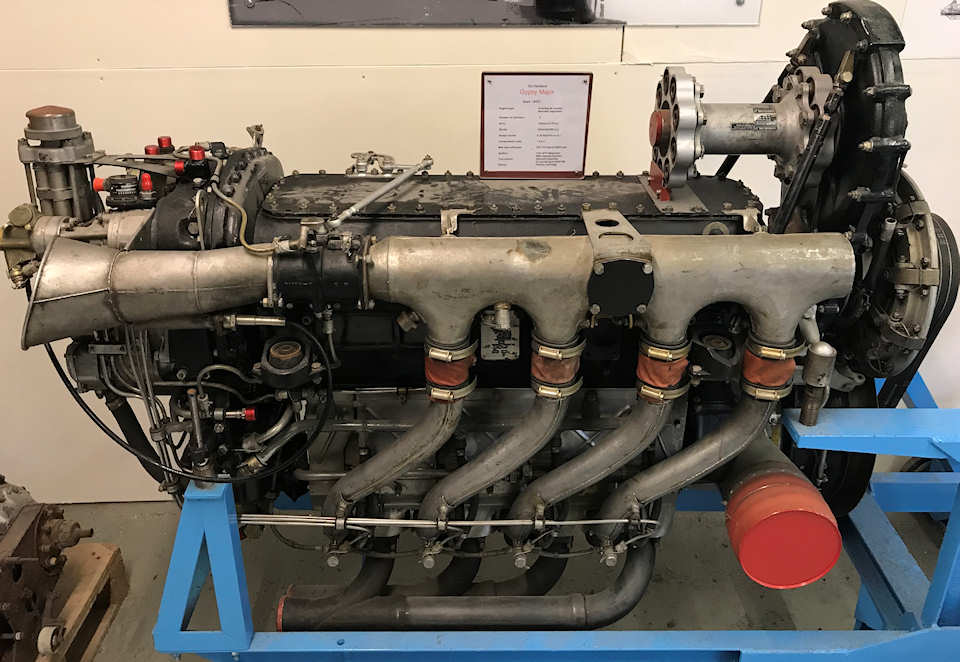
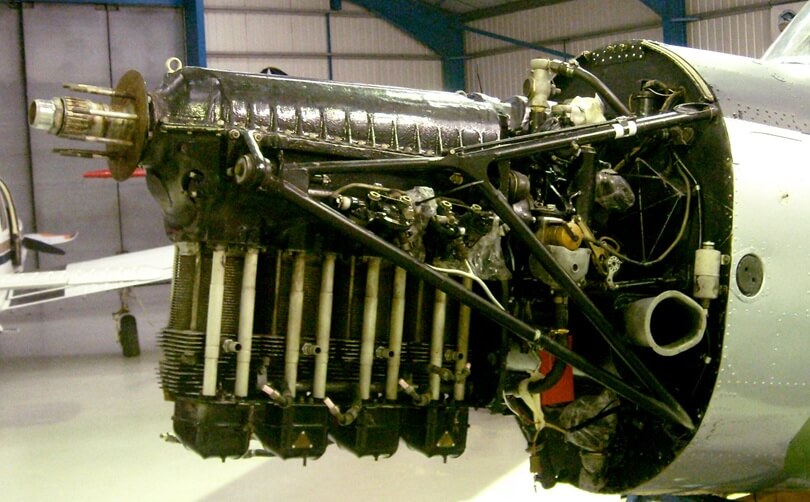
The origins of the Gipsy Major trace back to 1932, when the de Havilland Engine Company sought to enhance their existing Gipsy III engine. Designed by Major Frank Halford, the Gipsy Major—also known as the Gipsy IIIA—was essentially a bored-out version of the Gipsy III, increasing the cylinder bore from 114 mm to 118 mm to boost displacement from 5 liters to 6.1 liters. This modification allowed for greater power output while maintaining the inverted configuration, where cylinders point downward below the crankcase. The inversion kept the propeller shaft high, ensuring unobstructed forward visibility for pilots—a critical advantage in trainer aircraft.
Early models faced challenges, notably high oil consumption of up to four pints per hour, which necessitated frequent refills. This issue was mitigated through improved piston rings and other refinements. Production ramped up in the UK, with de Havilland Australia later manufacturing units using imperial measurements. By the end of production, 14,615 engines had been built, encompassing all variants.
During World War II, the Gipsy Major powered thousands of training aircraft, contributing significantly to Allied pilot preparation. Post-war, de Havilland shifted focus to jet engines, but the Gipsy Major evolved further. Maintenance intervals improved dramatically: from 1,000 hours between overhauls (TBO) in 1938 to 1,260 hours in 1943, and a world-record 1,500 hours by 1945. Supercharged variants reached 220 hp for helicopter applications, marking the engine’s adaptability.
The engine’s decline came with competition from American flat-four engines like those from Lycoming and Continental, which offered similar performance with modern features. Nonetheless, its legacy endures, with many engines still operational in restored aircraft.
Technical Specifications
The Gipsy Major’s design emphasized simplicity and durability, making it ideal for light aircraft. Below are the key specifications for the baseline Gipsy Major I model, drawn from reliable historical data:
- Type: 4-cylinder air-cooled inverted inline piston aircraft engine
- Bore: 4.646 inches (118 mm)
- Stroke: 5.512 inches (140 mm)
- Displacement: 373.7 cubic inches (6.124 liters)
- Dimensions: Length 48.3 inches (1,227 mm), Width 20.0 inches (508 mm), Height 29.6 inches (752 mm)
- Dry Weight: 300–322 pounds (136–146 kg), depending on variant
- Valvetrain: Overhead valve (OHV)
- Fuel System: Downdraught Claudel-Hobson carburetor (models like A.I.48 H3M or H1M)
- Oil System: Dry sump with gear-type pump
- Cooling System: Air-cooled
- Compression Ratio: 5.25:1 (early models) to 6:1 (later variants)
- Power Output: 122 hp at 2,100 rpm (cruise), up to 145 hp (108 kW) at 2,550 rpm (maximum for 1 minute)
- Specific Power: 0.39 hp/in³ (17.6 kW/L)
- Fuel Consumption: 6.5–6.75 gallons per hour (28.4–30.7 L/h) at 2,100 rpm
- Oil Consumption: Up to 1.75 pints (0.99 L) per hour
- Power-to-Weight Ratio: 0.48 hp/lb (0.78 kW/kg)
These specs varied across variants, with improvements like sodium-cooled exhaust valves and strengthened crankshafts enhancing performance and reliability.
Variants and Modifications
The Gipsy Major family evolved through numerous variants, grouped into three main categories post-war: Gipsy Major 1, 10 Mk 1, and 10 Mk 2. Each incorporated modifications for better performance, fuel compatibility, and specific applications.
Gipsy Major 1 Series
- GM 1: Basic model with aluminum bronze heads, rated at 122 hp at 2,100 rpm, suitable for unleaded fuels only.
- GM 1F: Aluminum alloy heads for leaded fuels, used in post-war Tiger Moth glider tugs.
- GM 1C/D: Higher compression (6:1), fuel pumps, screened ignition; up to 142 hp at 2,400 rpm.
Gipsy Major 10 Mk 1 Series
- GM 10 Mk 1-1: Civil version of military Mk 7, 142 hp.
- GM 10 Mk 1-3: Redesigned timing gear and accessory drives.
Gipsy Major 10 Mk 2 Series
- GM 10 Mk 2: Strengthened crankshaft, splined propeller shaft, 145 hp at 2,550 rpm.
- GM 10 Mk 8: Military variant with white metal bearings.
Advanced variants included:
- Gipsy Major 50: Supercharged, 197 hp.
- Gipsy Major 200/215: Helicopter-focused, 200–220 hp with turbo-supercharging.
Over 60 modifications addressed issues like cylinder head strength (e.g., Mod G2197 for ‘Y’ alloy heads) and valve improvements (e.g., Mod G1861 for sodium-filled exhaust valves). Cylinder heads were categorized by material—aluminum bronze (unleaded only) or alloy (leaded compatible)—and had to be fitted in matched sets.
Licensed derivatives, such as the Alfa Romeo 110 and IAR 4-G1, extended its global reach.
Within Aviation
The Gipsy Major powered a wide array of aircraft, from trainers to light transports. Its most famous application was in the de Havilland Tiger Moth, used extensively for RAF pilot training during WWII. Post-war, it equipped the de Havilland Canada DHC-1 Chipmunk, which replaced the Tiger Moth in service.
Other notable aircraft include:
- De Havilland models: Fox Moth, Hornet Moth, Leopard Moth, Dragonfly, Puss Moth.
- Auster series: Aiglet, Autocar, Autocrat.
- Miles aircraft: Falcon, Gemini, Hawk Trainer, Messenger, Monarch.
- International designs: AISA I-115, Ikarus Aero 2, Koolhoven F.K.43, Saab 91 Safir, Stampe SV.4.
It also found use in helicopters like the Saunders-Roe Skeeter and experimental aircraft. Today, many Gipsy Majors remain airworthy, with around 175 Tiger Moths registered in the UK as of 2011, though not all fly.
Legacy and Modern Relevance
The Gipsy Major’s enduring appeal lies in its robust design and historical significance. It symbolized the transition from biplanes to modern trainers and influenced subsequent engine developments, like the six-cylinder Gipsy Six and 12-cylinder Gipsy Twelve. While largely superseded by flat engines, it thrives in the vintage aviation community, including the IHFF.
The de Havilland Gipsy Major engine exemplifies engineering excellence from the golden age of aviation. Its innovative inverted design, evolutionary variants, and widespread applications cemented its place in history. For restorers, pilots, and historians, it continues to inspire, proving that classic technology can still take to the skies.