Aer Lingus’ Iconic First Aircraft and Its Modern Replica
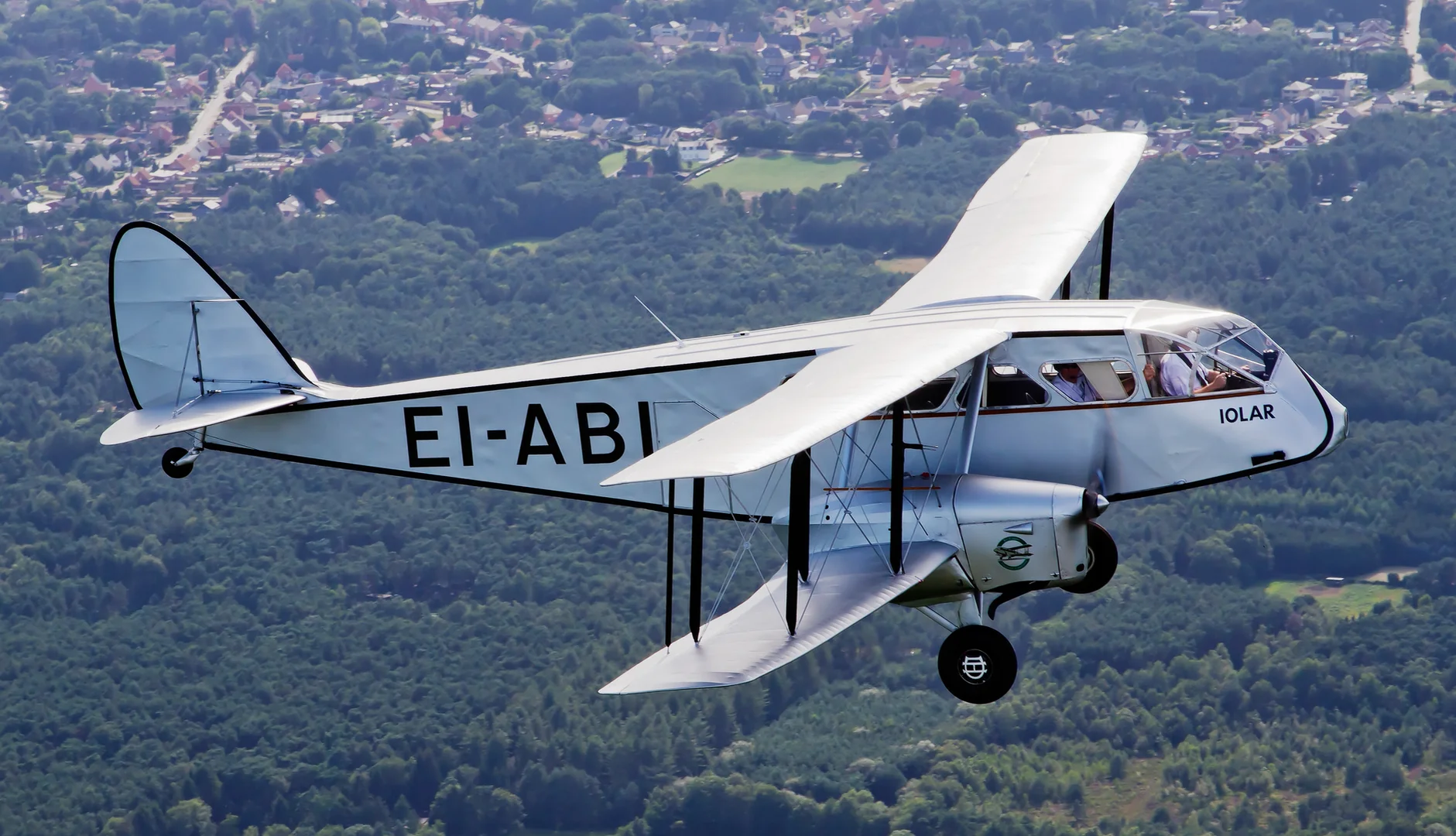
EI-ABI “Iolar” holds a legendary place in Irish aviation history. As Aer Lingus’ very first aircraft, the De Havilland DH.84 Dragon biplane named “Iolar” (Irish for “Eagle”) launched Ireland’s national airline in 1936. Though the original was sold and later lost, the registration EI-ABI was revived for a meticulously restored replica that continues flying today as a symbol of Aer Lingus heritage.
This article explores the full story of EI-ABI Iolar — its pioneering role, early operations, replacement, tragic fate of the original, and the creation of the current airworthy EI-ABI replica.
The Birth of Aer Lingus and Delivery of EI-ABI Iolar
Aer Lingus was founded in 1935-1936 as Ireland’s national airline (the name derives from “Aer Loingeas,” meaning air fleet). The airline received its first aircraft on May 26, 1936: a six/seven-seat De Havilland DH.84 Dragon biplane, registered EI-ABI and christened Iolar.
Based initially at Baldonnel Aerodrome (now Casement Aerodrome, home of the Irish Air Corps), this wooden biplane with two Gipsy Major engines marked the start of commercial air services for the young Irish state. The aircraft cost relatively little and suited short cross-channel routes perfectly.
Maiden Flight and Early Operations (1936–1938)
On May 27, 1936, EI-ABI Iolar operated Aer Lingus’ inaugural revenue flight from Baldonnel to Bristol (Whitchurch) Airport in the UK, carrying five passengers. This historic journey launched regular services between Ireland and Britain.
The aircraft quickly expanded operations, including Dublin to Liverpool routes. A second aircraft — the larger four-engine De Havilland DH.86 Express named Éire — joined soon after, enabling extensions to London (Croydon Airport) and the Isle of Man. Iolar served as Aer Lingus’ workhorse during these formative years, proving the viability of Irish commercial aviation despite limited infrastructure and modest passenger numbers.
Replacement of the Original EI-ABI and Its Fate
By early 1938, Aer Lingus needed larger, more capable aircraft for growing demand. In February 1938, the airline sold EI-ABI to British operator Channel Air Ferries. The Dragon was re-registered as G-ACPY (some sources note variations like G-APCY due to transcription). It was replaced in the Aer Lingus fleet by a more modern De Havilland DH.89A Dragon Rapide.
The original Iolar’s story ended tragically during World War II. Operating under its British registration, G-ACPY was shot down by a Luftwaffe Heinkel He 111 bomber on June 3, 1941, off the Scilly Isles. All aboard were lost. This wartime loss underscored the dangers faced by civilian aviation in the early 1940s.
The Current EI-ABI Iolar: Restoration and Revival
The registration EI-ABI was not forgotten. For Aer Lingus’ 50th anniversary in 1986, the airline acquired a different but period-correct DH.84 Dragon 2 (built in 1936, previously G-AECZ / EI-AFK and with RAF service history as AV982).
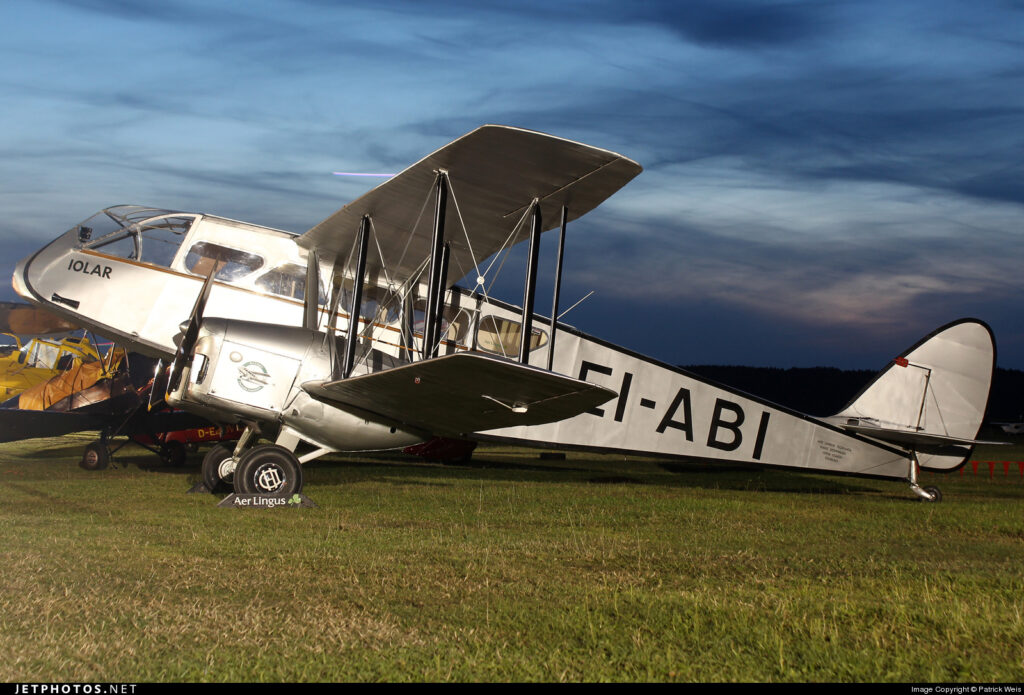
This airframe was restored to airworthy condition, repainted in the original Aer Lingus livery (silver/cream with green accents), and officially re-registered as EI-ABI “Iolar” in August 1985. It flew again for air displays, corporate events, and anniversaries from 1986 to 1991.
After intermittent use and grounding around 2004, a major restoration project began in 2010. On February 24, 2011, the aircraft made its first post-restoration test flight at Dublin Airport, perfectly timed for Aer Lingus’ 75th anniversary celebrations. It flew commemorative routes, including a symbolic return to Bristol.
Today, the current EI-ABI Iolar is maintained by the Aer Lingus Charitable Foundation (often associated with the Irish Historic Flight). It appears at airshows, anniversaries (such as the 80th and 85th), and educational events, keeping the pioneering spirit alive.
Technical Specifications of the DH.84 Dragon (Iolar)
Key specs (applicable to both original and replica):
- Type: Twin-engine biplane (DH.84 Dragon / Dragon 2)
- Engines: 2 × de Havilland Gipsy Major (130 hp each)
- Cruising Speed: Approx. 140-150 mph
- Range: Around 460 miles
- Capacity: 6-7 passengers + pilot
- Construction: Wooden frame with fabric covering
The replica uses authentic period details and modern safety upgrades where required for airworthiness.
Legacy and Importance in Irish Aviation
EI-ABI Iolar symbolizes the humble yet ambitious beginnings of Aer Lingus, which grew from one biplane into a major international carrier with Airbus A320/A321/A330 fleets. The replica preserves this heritage, educating new generations about Ireland’s aviation pioneers and the risks of early commercial flying.
Commemorative flights, such as the 80th anniversary trip to Bristol in 2016, evoke national pride. The story of the original’s sale, wartime loss, and the replica’s revival highlights resilience in aviation history.
EI-ABI Iolar – An Enduring Symbol
From its pioneering 1936 maiden flight to the airworthy replica flying today, EI-ABI Iolar remains one of the most cherished icons in Irish aviation. While the original was replaced after just two years of service and ultimately lost to war, the current EI-ABI keeps the legacy soaring.
For aviation enthusiasts, historians, or anyone interested in Aer Lingus history, the sight (or flight) of Iolar is unforgettable. The aircraft represents not just a plane, but the birth of modern Irish air travel.